
The Numbers are Wrong

Whenever you see a number published by an economist or a number about an economy, you need to ask questions as those numbers are often misleading.
Robert Kennedy gave a great speech in 1968 about the flaws of GDP. GDP is poor measure of poor countries. Then in my last post I pointed out that per-capita GDP too can be misleading due to mining or small populations.
The same is true twice again for two prominent “facts” about Africa: smallholder farmers and intra-African trade.
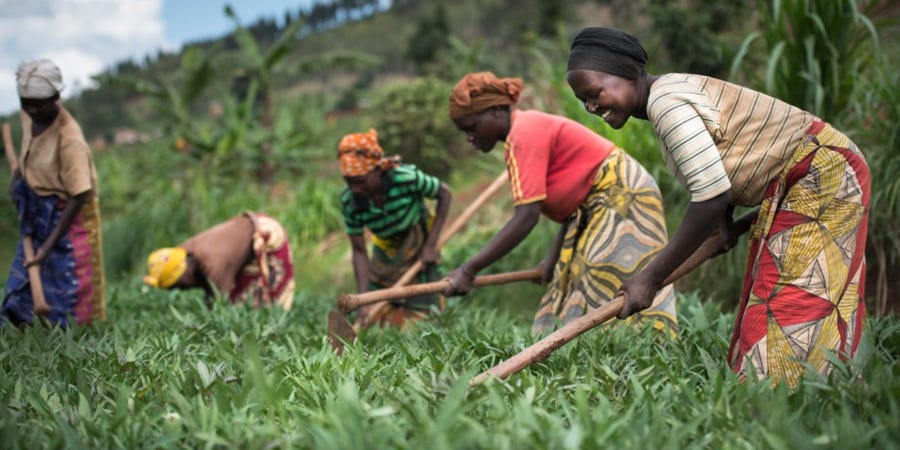
Search the internet or ask the AI’s “how many smallholder farms in Africa” and the “answer” is 33-55 million. Kenya, Uganda, Tanzania and Rwanda combined have over nearly 200 million citizens. Half are 19 years old or younger. Around 80% of the adults are farmers. If we generously assume every adult is married there are around 40 million smallholder farms just in those four countries. Nigeria has another 250 million citizens, Ethiopia and DRC each another 100 million, and another 90 million in Zimbabwe, Zambia, Malawi, and Mozambique.
There are 1.5 billion Africans, half children, 60%-70% farmers, and thus actually 300-500 million smallholder farms. What I suspect happened is that someone in a UN or World Bank research group dropped a zero a decade ago and everyone is just regurgitating their erroneous value.
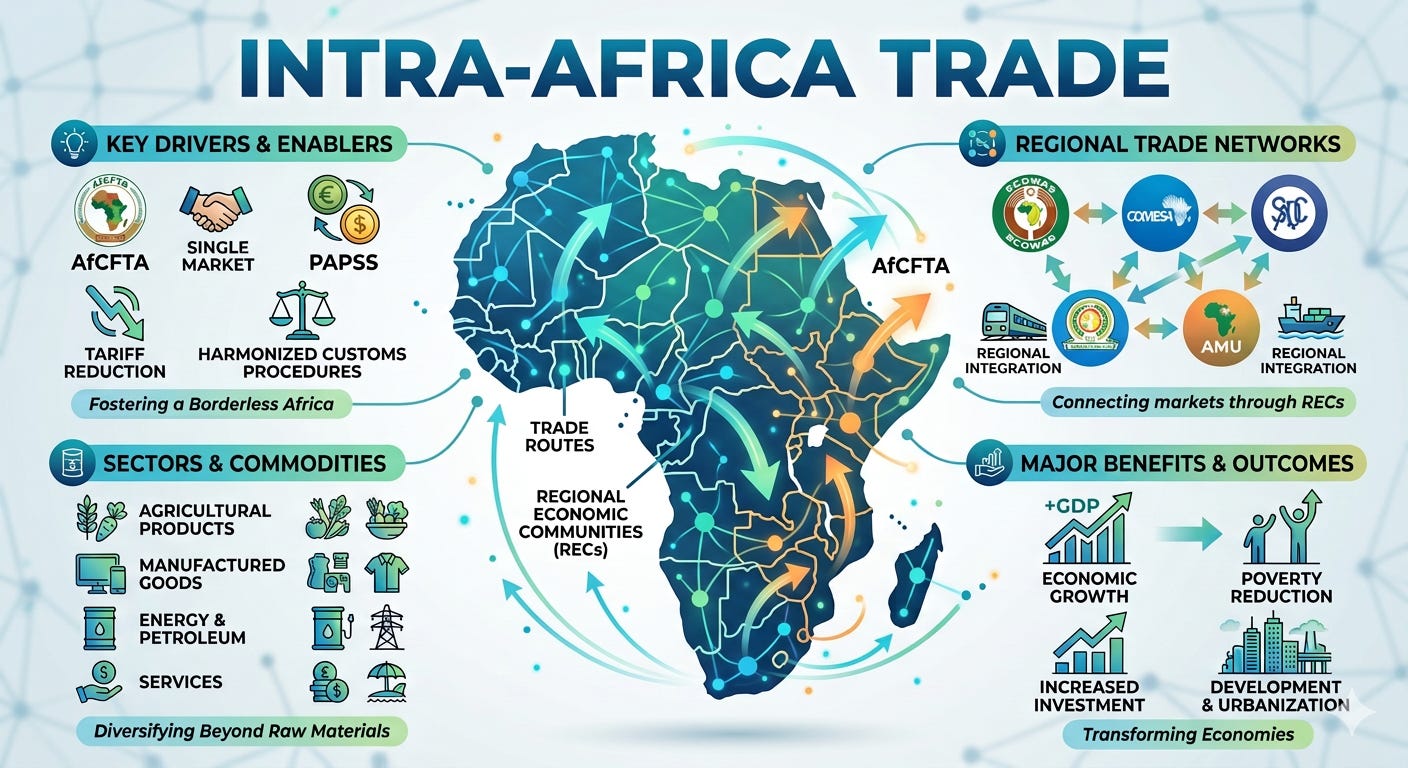
It looks like the measure of intra-Africa trade is a different type of error. It seems this simply isn’t well measured by local governments and the low values are taken as truth by the UN and World Bank and others when they report the scale of that trade.
The Economist did their own primary research, as did the OECD, discovering that intra-Africa trade is similar in scale to intra-EU trade.
New research by the Organisation for Economic Co-operation and Development suggests that official statistics miss a vast amount of food trade. In West Africa alone, unrecorded intra-regional food trade is worth roughly $10bn a year, up to six times higher than reported. Once informal flows are counted, West Africa’s internal food trade looks closer to the European Union than to a fragmented continent.